
Plenty of ideas come and go, technologies prove their worth in day-to-day building operations. Occupancy sensing, system integration and software-driven intelligence aren’t just sticking around but expanding, evolving and becoming the backbone of smarter, more efficient buildings.
We sat down with Scott Ziegenfus, Vice President of Technical Customer Experience at Current, to get his take on which lighting control technologies are living up to the hype and where they’re headed next. With over 30 years in the industry and a leadership role on the BACnet Committee, Scott has a clear view of what’s working, why it matters, and how we can use lighting infrastructure to build more intelligent spaces.
Q: Thanks for chatting, Scott. You’ve seen a lot of lighting trends come and go, but which ones do you think have truly proven their staying power?
A: Some technologies have certainly faded while others became expectations, and occupancy sensing definitely falls into that second group. The original pitch was all about turning the lights off when nobody’s in the room to save energy, and that’s still important, but now it’s a baseline feature that people largely expect.
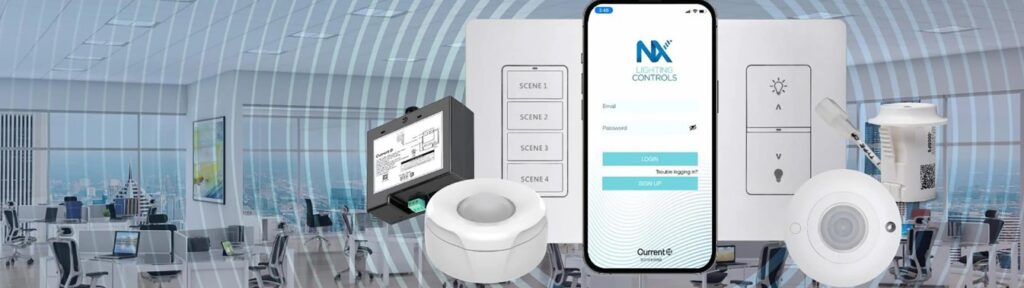
What’s changed is that the data these sensors collect is being used for more than lighting. It’s feeding HVAC systems, informing space management decisions and even shaping how facilities allocate square footage. Its footprint matches human movement, and that’s exactly why lighting has become a core piece of smart building infrastructure.
Another one that’s held up really well is daylight harvesting. It’s the idea that if you’ve got sunlight coming through the windows, then you don’t need the lights running at full output, so the system dims automatically to balance natural and artificial light. This kind of control was once a hallmark of LEED designs mainly, but now it’s showing up in everyday buildings that are trying to meet the latest codes. Like with occupancy controls, it’s become something people rely on without realizing it.

Q: You mentioned lighting feeding other systems. Can you give an example of how this supports a more connected, intelligent building?
A: Certainly, and one way to see it is by looking at how system integration has progressed. Let’s say someone swipes their badge to enter a building. That single action can turn on the lights, adjust the thermostat or unlock a door all because those systems are now working together.
It’s the same thing in emergencies. When a fire alarm goes off, lighting should guide the way out, and HVAC should shut down automatically. These aren’t isolated systems anymore, and lighting is often the system that enables this collaboration, because it’s already distributed throughout the entire building. It’s on the grid, and it’s powered, and it’s connected.
So now we’re seeing lighting become a data and infrastructure platform, not just a delivery mechanism for light.
Q: How does lighting data also factor into smarter decisions about space usage and layout?
A: This is one of the most exciting applications, honestly. Sensors embedded in lighting are already tracking when spaces are occupied, for how long and by how many people. That gives facility managers real-time insight into how the building is used.
You might realize, for example, that a large conference room only ever hosts a few people at a time. Or that one room hasn’t been used at all in weeks. That’s powerful. It helps you optimize layouts, reduce wasted space and adjust HVAC and lighting schedules to reflect real behavior, not assumptions.
Lighting makes that possible because it’s in every room, over every desk and it already has the hardware to monitor what’s happening.
Q: What about software? How has that changed the game?
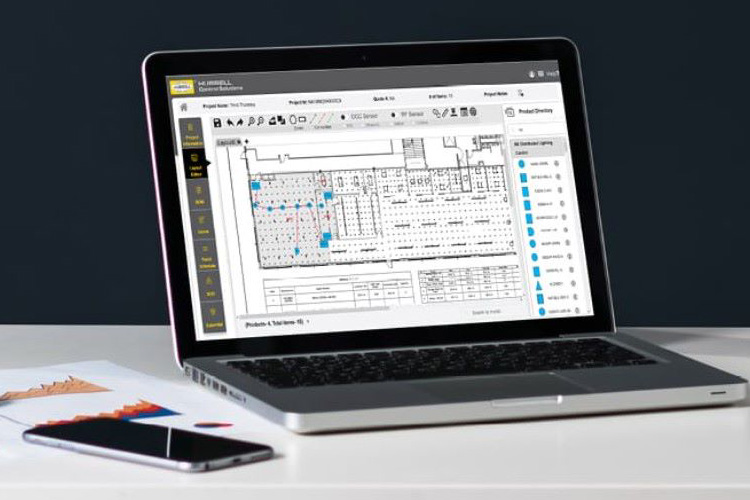
A: It used to be all about hardware—wall switches, dimmer panels, control boxes. But today controls increasingly are software-defined. It’s about how systems analyze data coming from sensors and then act on it.
We’re moving toward a world where lighting doesn’t just respond but learns and even predicts. It tells other systems what’s going on and lets them adjust in kind. That’s where building-wide optimization comes from.
And again, lighting is central to that because it already touches every space. You’re not adding a new device, rather, you’re just unlocking the intelligence inside the ones already installed.
Q: Is there a standard or framework making that kind of interoperability possible?
A: Definitely. I’ve been working with the BACnet Committee for over 16 years, and I’m actually about to step in as Chair. It will be the first time someone from the lighting world leads the committee that has traditionally been HVAC-dominated.
BACnet is the communication protocol that lets building systems talk to each other. What makes it powerful is that it’s an open standard. Anyone can use it and right now, we’ve got over 1,500 manufacturers worldwide who’ve built BACnet into their devices.
One of my goals as Chair is to simplify the standard. Currently it’s a 1,600-page document—great content, but it can be overwhelming, especially for new engineers or smaller players in the space. If we can make it easier to implement, we’ll see even more systems integrate effectively.
Q: How does all of this tie into sustainability efforts?
A: Lighting and controls have already done a lot for sustainability. LED retrofits and occupancy sensors have delivered real energy savings for years now. But the next phase is about smarter coordination between systems.
Take a room that gets a lot of afternoon sun. You could cool it with A/C—or you could lower the shades. Which one uses less energy? If those systems are communicating, you don’t have to guess. The building adjusts itself intelligently.
Or let’s say a space only gets used two days a week. Do you need to run HVAC the other three? Probably not, but you won’t know that unless the system tracking occupancy shares that info with HVAC. And chances are good that information came from a sensor embedded in a light.
So no, lighting isn’t a sustainability protocol. But it enables sustainability by giving other systems the insight they need to reduce energy use effectively.