Where Electrical Fittings Are Needed
Whether it’s routing main power feeds or supporting liquid cooling loops, electrical fittings play a critical role at every point of connection in the data center.
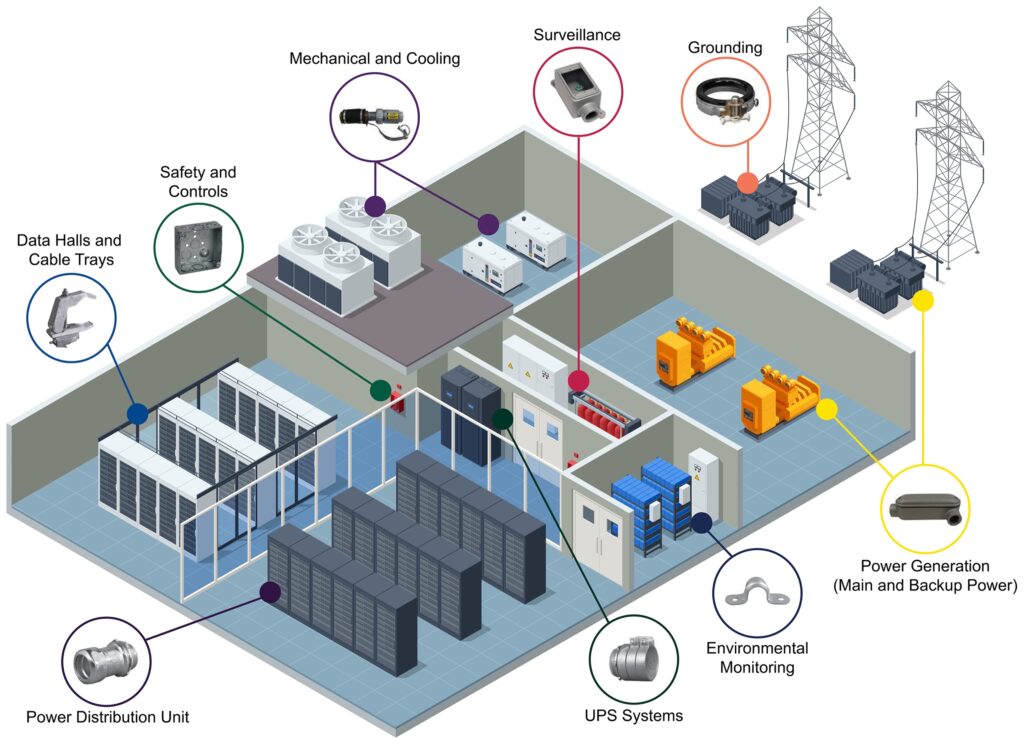
- Main Power Feed: High-voltage power cables are routed from the utility entry or backup generators to switchgear or main distribution panels.
- Overhead Cable Trays: Cable trays manage the high volume of cables required for power and network connectivity.
- Power Distribution Units: Conduit fittings are frequently needed for Power Distribution Units (PDUs) to arrange and safeguard wires that go to server racks or other equipment. Fittings ensure a compliant connection, particularly in the United States, where adherence to NFPA 70 Article 300 is essential.
- Control Wiring: Conduit protects control and sensor wiring for building systems, such as HVAC controls which regulate temperature and humidity
- Power to Cooling: Power cables are routed to Computer Room Air Conditioning (CRAC) devices or other cooling equipment via conduit or cable tray. Unlike standard HVAC, CRAC units are engineered for continuous operation, offering high-precision control to prevent overheating, static electricity buildup, or condensation that could damage equipment. Data center cooling systems commonly consume 30-50% of total electricity, as servers generate significant heat, requiring robust cooling to maintain optimal performance.
- Liquid Cooling System: Liquid cooling is important in high-density data centers where standard air cooling may not be sufficient. Liquidtight fittings seal out liquids to prevent damage to electrical wiring.
- UPS Systems: Conduit fittings connect Uninterruptible Power Supplies (UPS) so they can provide dependable and secure power delivery to vital systems.
- Environmental Monitoring: Conduit-protected wire is frequently used to connect temperature, humidity, and water leak sensors to central monitoring systems.
- Grounding: Grounding wires can be routed via fittings, so racks, infrastructure, and equipment are properly grounded.
- Surveillance: To ensure safe and dependable operation, including in harsh outside areas, fittings are used to shield wiring for motion sensors, IP cameras, and access control systems.
Fittings: The Foundation of Power Infrastructure
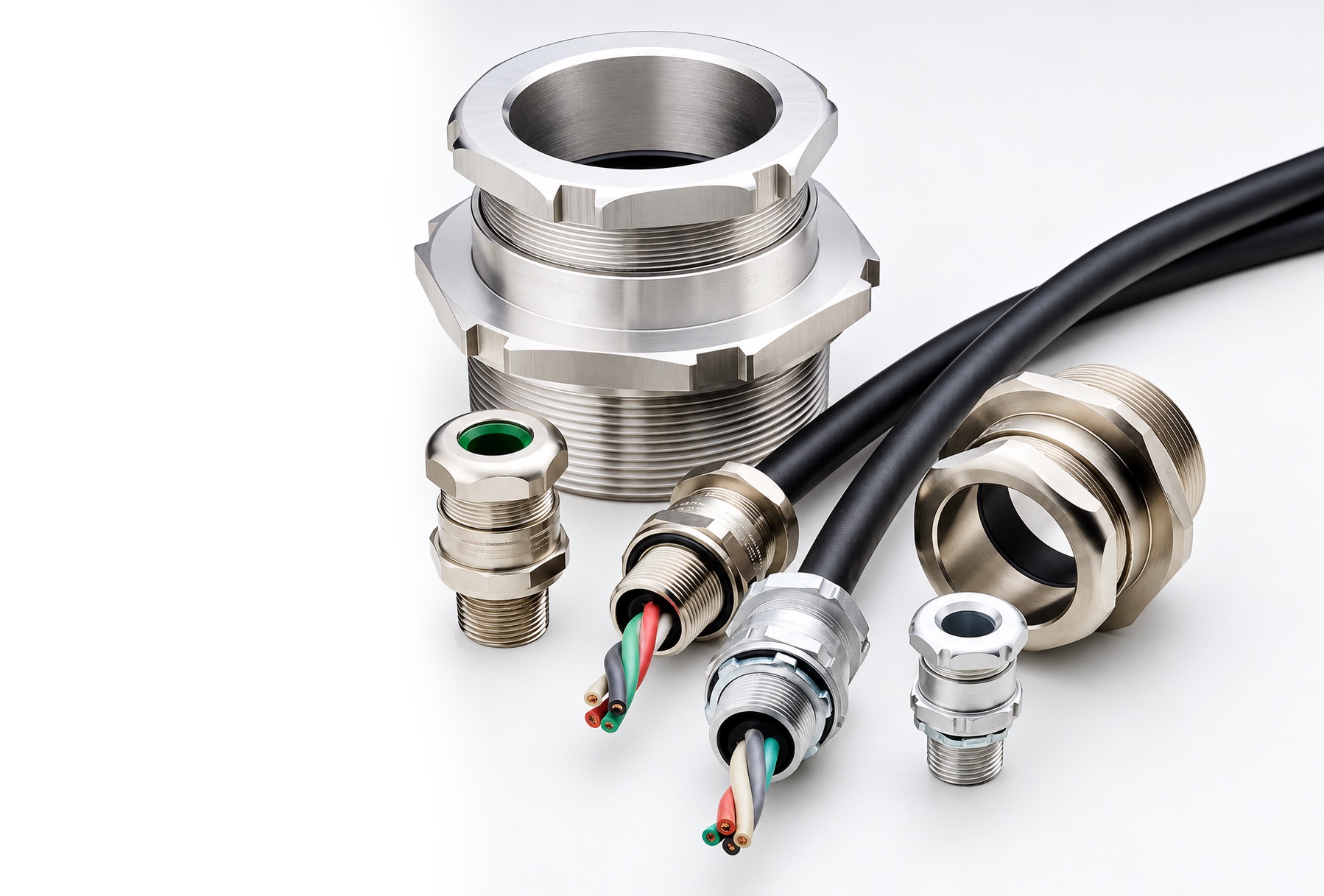
In data centers, every component in the critical power path—from conduit bodies and couplings to cable glands—has a role to play in system reliability. With major outages potentially costing hundreds of thousands or even millions of dollars, “good enough” fittings simply aren’t good enough.
Data centers built for tomorrow’s power densities will require fittings selected for the application, using appropriately certified components where required, along with materials and designs engineered to withstand corrosion, thermal cycling, liquids, vibration, and other demanding operating conditions. Specifying the right fittings is part of the same reliability strategy that drives decisions about generators, UPS systems, and other critical infrastructure. As data center power demand races toward more than doubling by 2030, the facilities built for long-term uptime won’t rely on redundancy alone. Reliability will depend on every part of the system, including the connections and fittings, to help keep critical infrastructure operating as designed.