Today, there are approximately 12,200 data centers operating worldwide with thousands more slated to come online in the coming years. Global capacity is projected to nearly double by 2030 with AI and hyperscale cloud demand driving most of that new build-out. Along with new construction, existing data centers are scaling their operations, adding more high-density servers and storage devices to meet vast computational needs.
Not surprisingly, data center energy requirements are growing at the same breakneck pace. Data centers consume up to 50 times as much electricity per square foot as conventional offices, making them one of the most energy-intensive building types. In 2023, energy usage by U.S. data centers reached 176 TWh, representing 4.4% of overall electricity consumption in the U.S. By 2030, data center energy use is expected to quadruple, primarily due to the use of accelerated servers for AI services.
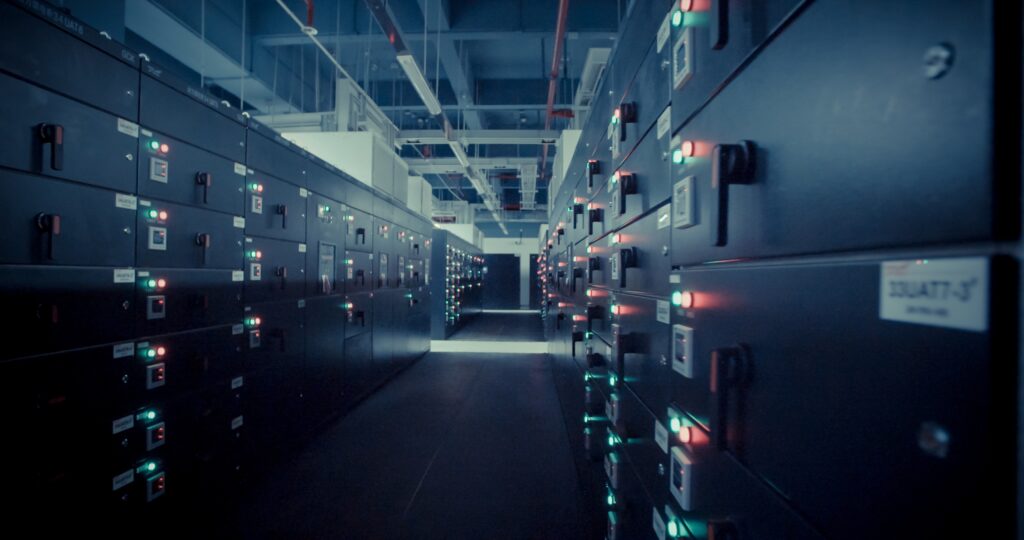
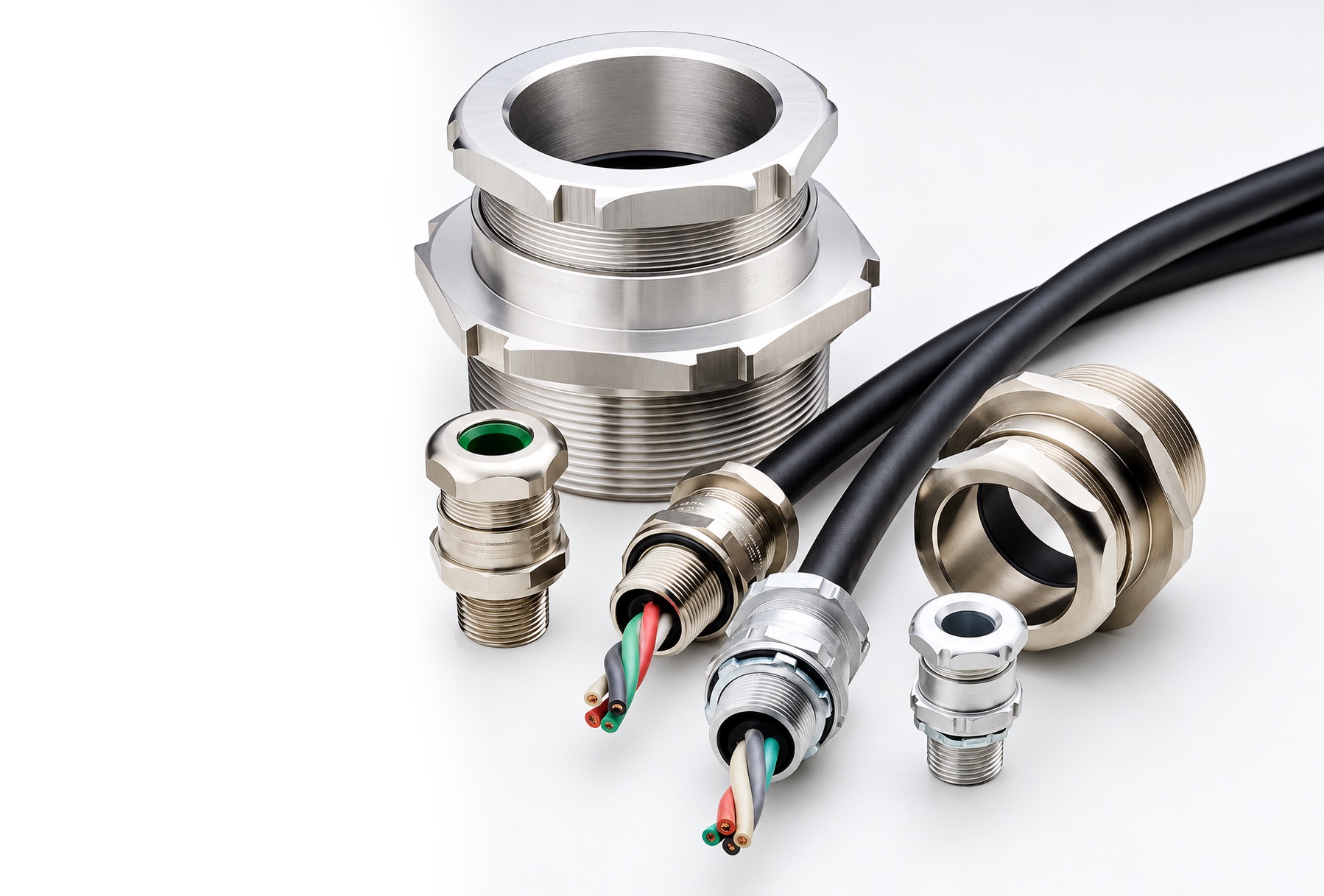
This insatiable appetite for power puts enormous strain on data center electrical infrastructure, yet the components under the most scrutiny are rarely the ones that actually determine reliability. Multi-megawatt UPS systems and switchgear get the attention, but a power distribution system is only as strong as its smallest connection point. Conduit bodies, unions, couplings, elbows, cord grips, cable glands, hubs, bushings, tray cable accessories, outlet boxes and enclosures — these are the building blocks that hold the entire electrical path together, and they’re too often treated as commodities rather than critical hardware. A single substandard fitting or a poorly rated coupling can become the weak point in an otherwise redundant system: a source of arcing, corrosion, loosening under thermal cycling, or moisture ingress that no amount of UPS capacity can compensate for.
Redundancy buys resilience at the system level, but it can’t fix a failure born at the component level. That’s why specifying every element of the electrical infrastructure — down to the smallest connector — isn’t over-engineering. It’s the difference between planned uptime and an unplanned outage.
What Is a Data Center
Before diving in, it’s worth understanding what a data center is and how dramatically that definition has evolved in just the past few years.
Data centers have always been the quiet infrastructure behind the digital world. These windowless concrete fortresses house the servers, storage systems, and GPUs that keep modern business running, backed by the cooling, backup power, and physical security that make them mission-critical environments. Data centers span an enormous size range, from a few-hundred-square-foot server room to mega-campuses like Switch’s Citadel Campus in Nevada, designed to reach up to 7.2 million square feet at full build-out.
Data centers themselves aren’t new. What’s new is what they’re built for. A decade ago, these facilities were largely storing files and serving websites. Today, they’re training and running AI, a workload that demands a step-change in power density, and with it, a step-change in the quality and reliability of the hardware infrastructure behind it.
How Data Centers Are Powered
The largest hyperscale and AI data center campuses routinely draw between 100 MW and 500 MW, which translates to millions of kilowatt-hours a day and easily matches the continuous power demand of a small or mid-sized city.
Where does this power come from? Most data centers rely on the local electrical grid. Electricity drawn from the grid typically is stepped down to a lower voltage using transformers (480V or 208V). It’s then distributed throughout the facility via Uninterruptible Power Supplies (UPS), metered or unmetered Power Distribution Units (PDUs), and in many facilities, Remote Power Panels (RPPs) that break the PDU’s output into individual branch circuits. These branch circuits are routed to rack power distribution units (rPDUs) located within the server racks, where power is then delivered to the individual IT devices, completing the power distribution path. The UPS ensures immediate, redundant power in the event of a short interruption, along with protection against surges and sags. During extended outages, the data center may activate backup generators or redundant utility feeds. Another backup option is microgrids that integrate renewable energy sources.
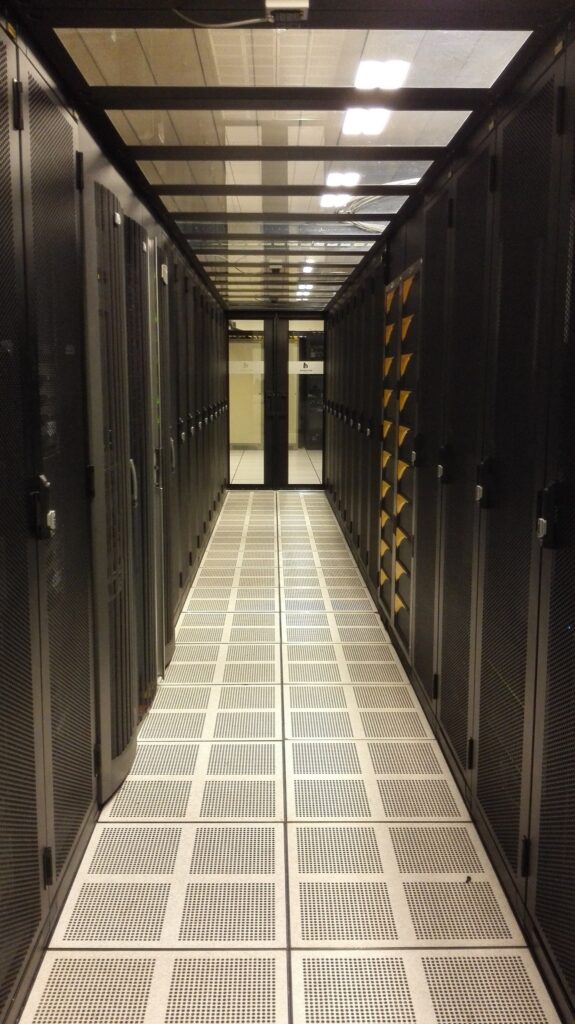
Yet even the most robust power architecture isn’t immune to failure. When redundancy measures fall short, the consequences ripple through the entire facility and they add up fast. Even a short power outage at a data center will interrupt the mission-critical applications it hosts. Longer power interruptions can corrupt data, or put a halt to cooling systems, leading to cascading failures including damaging servers and data storage devices.
Financial consequences are dire. A 2020 report pegged the average cost for a data center outage at $12,900 per minute, rising to $23,750 for larger enterprises. Industry surveys by ITIC reveal that 90% of mid-to-large enterprises face losses exceeding $300,000 per hour. Within that group, 41% of enterprises report losing between $1 million and $5 million per hour during a severe incident. Indirect costs linked to an outage can multiply expenses by adding data recovery and restoration fees, legal and compliance penalties, as well as lost productivity associated with employee downtime.
Depending upon its square footage, a data center may use several miles of cables for both AC and DC power distribution. High voltage cables (480V) distribute power throughout the facility to minimize energy loss over distance, while low voltage (120V, 208V) provides power to individual racks and IT equipment.
To guarantee effective power distribution and ease of maintenance, these cables must be protected, organized, and routed. This is achieved through a combination of structured cabling techniques, primarily the use of cable trays and pathways. Cable trays are preferred in data centers for their heat dissipation and cost-effectiveness for large-scale cable deployments and expansions. Metal conduit runs are also common. In data centers, metal conduit serves three key roles: routing heavy-duty power distribution, protecting cabling mechanically in high-traffic utility areas, and shielding high-voltage lines from electromagnetic interference. Rather than being used throughout the facility, metal conduit is applied selectively — typically reserved for power and high-voltage runs, not standard low-voltage data lines.
In both cable trays and conduit runs, high-quality fittings are needed for several reasons. Well-constructed fittings will shield data and power cables from environmental elements like corrosive chemicals, moisture, and dust as well as physical damage. Fittings also contain electrical faults to prevent the spread of fire. When properly installed to navigate corners and transitions, fittings simplify maintenance and upgrades, while allowing for future expansion. In addition to maintaining system reliability, they are also necessary for compliance with the National Electrical Code, TIA-942, and local regulations.