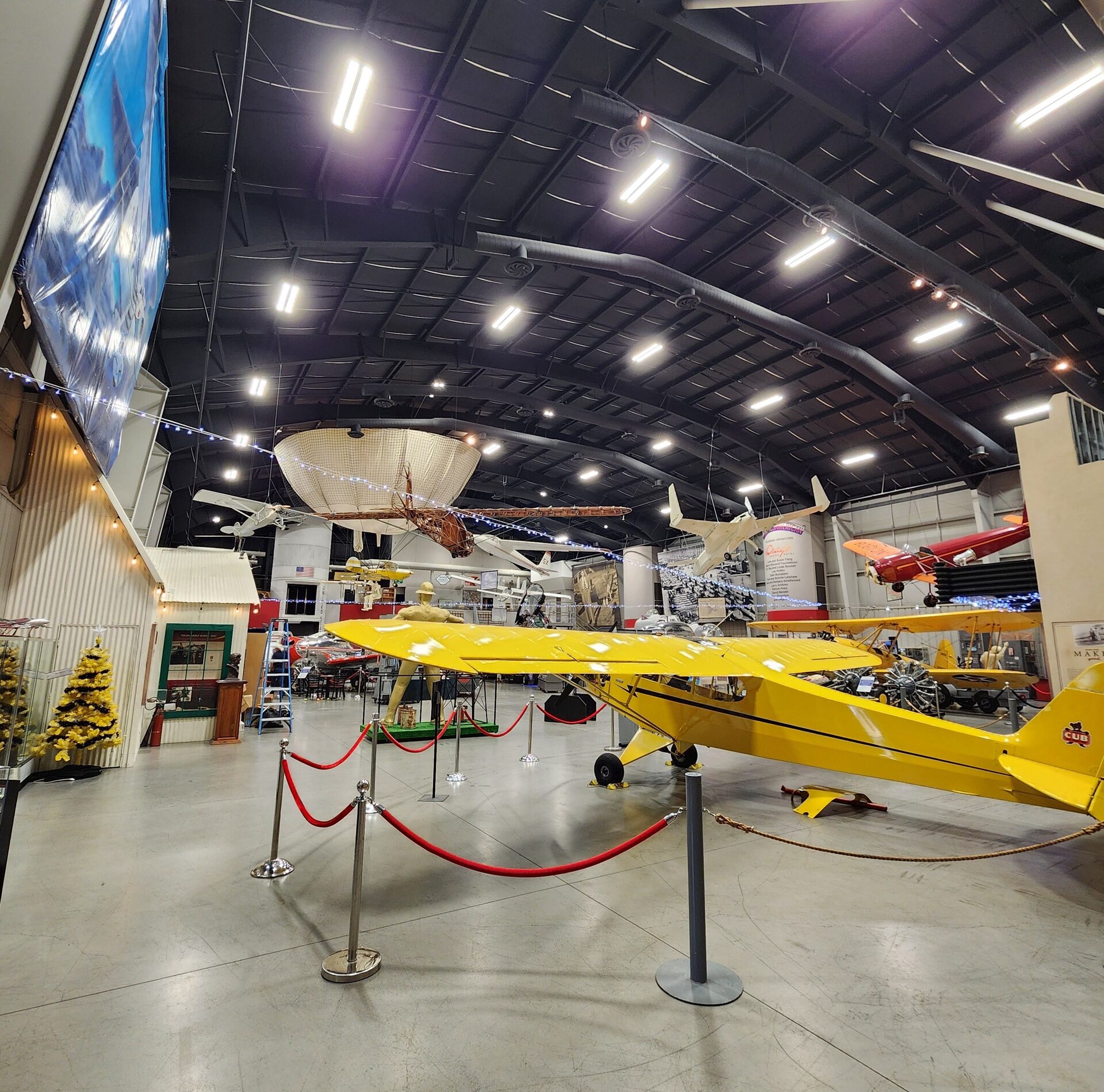
LIGHTING IS A CRITICAL ELEMENT for any museum environment, unobtrusively drawing attention to specific details of a display, so visitors notice the exhibits and not the lights. But when the system goes dark, it is hard not to notice. That’s the situation that the Tulsa Air & Space Museum found itself in recently when a power anomaly knocked out a significant portion of their high-bay LED lighting.
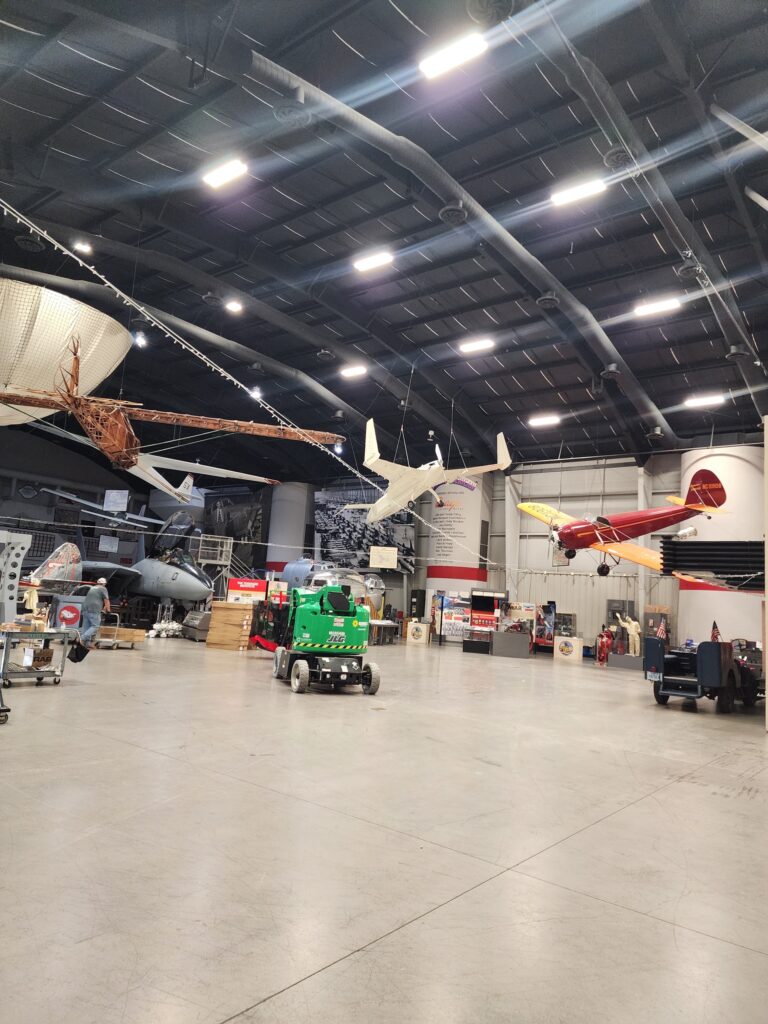
Without active monitoring of the system, it was impossible to determine the exact cause of the disturbance at the time, which made it difficult to avoid a repeat. Today, Wavecrest devices protect the museum’s facility against a wide range of anomalies, helping ensure visitors can continue to ignore the lighting while they enjoy the exhibits.
Before a solution was in place, the museum dealt with the immediate issues caused by the failure. Facility managers never look forward to replacing lighting, especially when fixtures are mounted 50 feet above the floor and require specialized equipment for access. In the facility’s 18,000 square foot, hangar-style building, at least 70% of their high-bay LED lighting was out, causing an expensive and disruptive problem.
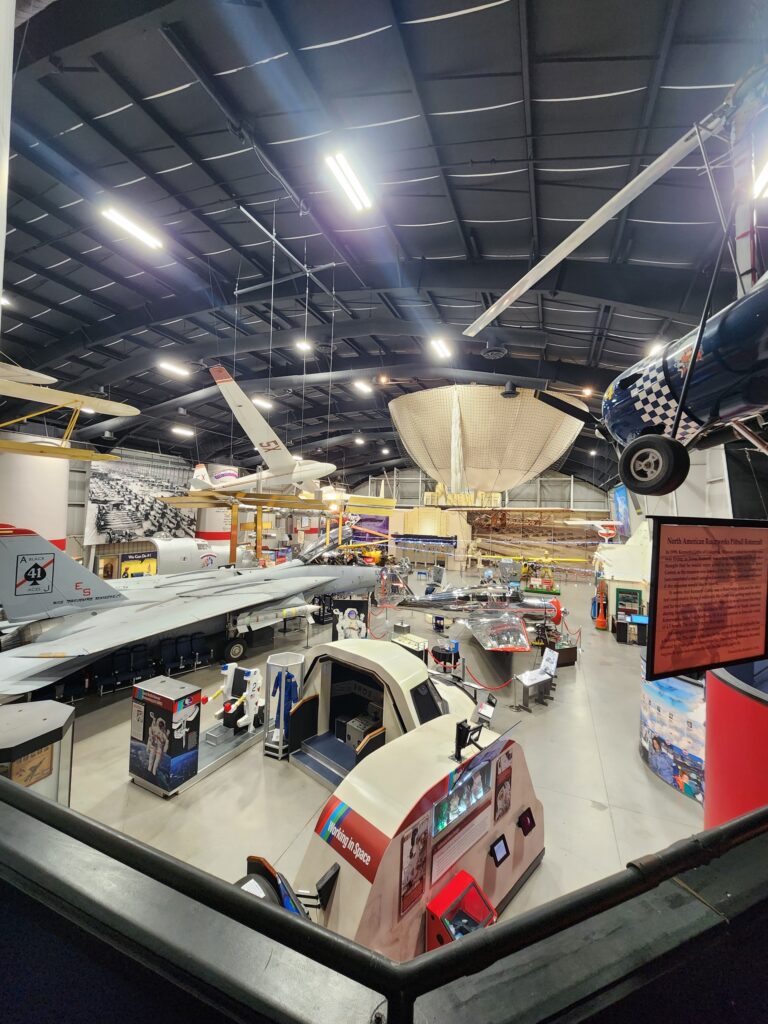
Tyson Taussig, a Tulsa-based lighting distributor with Broken Arrow Electric Supply, helped the museum investigate and determine the next steps. The lights were a combination of different LED fixtures, having been slowly replaced over a period of years. They were installed high in the hangar and maintained using a narrow jib, 40-foot electric articulating manlift. Due to the number of systems affected, the problem was chalked up to a likely power event, but concerns remained when a clear cause was not immediately apparent.
Replacing the fixtures was expensive, time-consuming, and disruptive to operations. In addition, traditional surge protectors do not shield fixtures from this type of event. To reduce the risk of repeat failures, Taussig and his team decided to safeguard the lights at the circuit level using Wavecrest devices.
Treating the Issue as a Power Quality Problem
On this project, Taussig was responsible not only for coordinating replacement fixtures, but also for helping the museum find a solution. “We knew that if something like this happened again, we were going to be right back up in the air replacing fixtures,” said Taussig. “That wasn’t a situation anyone wanted.” Beyond the fixture replacement, his team also evaluated how to safeguard the lighting circuits from future power quality issues.
Based on the extent of the outage and the range of affected equipment, the issue was treated as a power quality problem, and the team focused on preventing a repeat occurrence. Power disturbances can originate from the utility or from within a facility, and they often occur without warning. Surges, sags, swells, transients, overvoltage, undervoltage, and electrical noise are all common contributors to poor power quality, often referred to as “dirty power.” In modern facilities, sensitive electronics such as LED lighting and controls, as well as building systems and communications equipment, can be affected. For the museum, this made localized circuit protection a practical way to reduce exposure and add reassurance.
Selecting a Circuit-Level Protection Strategy
Taussig first learned about Wavecrest at LightFair 2025. Their unique, multi-stage design uses a patent-pending array of MOVs, capacitors, chokes, and transformers to guard against surges (with a let-through voltage of only 10%), radio frequency interference, transients, notching, noise, and flicker, to name a few. It also provides dedicated overvoltage protection. If an overvoltage or undervoltage occurs, such as when power comes back online after an outage or a neutral wire is accidentally disconnected, the unit opens the circuit, preventing damage to both the connected equipment and the device itself. A built-in digital display provides real-time voltage and amperage readings, supported by diagnostic indicator lights that signal load status, power presence, and high-voltage conditions.
For the museum project, the Wavecrest units stood out as a circuit-level solution that could be applied directly to lighting circuits without requiring changes to a facility’s entire electrical system. By combining surge suppression, transient voltage protection, electrical noise filtering, and automatic shutdown in a single device, the units provided comprehensive protection targeted at the lighting circuits. The goal was to reduce exposure to future disturbances and limit the likelihood of repeated museum callbacks, which was especially valuable when access was difficult and disruptions were costly. While the local power authority later determined that interference from wildlife had caused this outage, the Wavecrest devices now deliver circuit-level protection to guard against a wide range of unpredictable power disturbances.
Installation on Existing Lighting Circuits
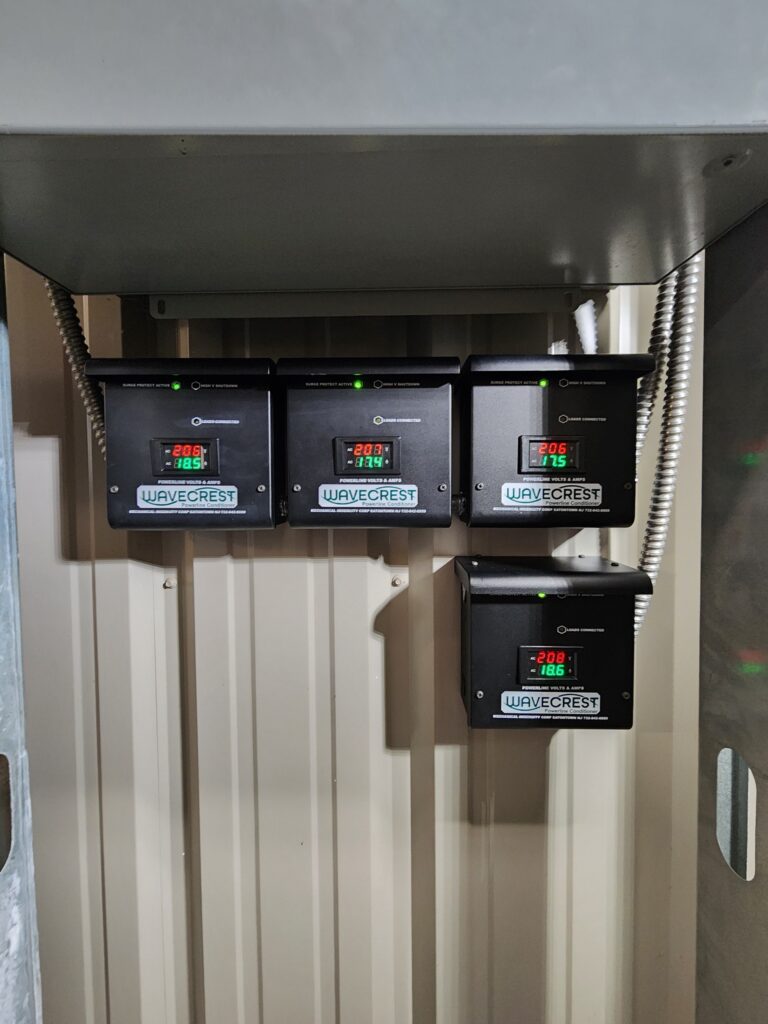
Wavecrest units feature patent-pending technology. Rated for use on circuits up to 30 amps and compatible with common commercial lighting voltages, including 277 volts, they can be integrated into existing lighting panels. Protection for the LEDs at the museum was added to four existing circuits using four 208-volt Wavecrest units, with each device tied into an existing 20-amp breaker. The electric panel is housed in a storage area build-out within the museum space, so no special equipment was needed for access. The installation was completed by Strike, a local electrical contractor for the project. “There were no issues. The install was straightforward,” says Casey Smith, the electrician who performed the work. “All four breakers passed through the Wavecrest units.”
While on site, the Strike team upgraded the lighting system with automated controls. Previously, lighting in the hangar was controlled manually using toggle switches inside the panel. Museum staff manually turned the lights on at the beginning of the day and off at closing. “We added convenience and energy savings,” Taussig says, “with scene control and automatic time schedules.” The museum also has a custom light setup for security camera visibility at night and special events outside normal business hours.
While the controls added convenience and energy savings, the power quality protection work went ahead independently and did not affect the project’s schedule. “The Wavecrest units didn’t hold up the job at all,” he said. “Our lighting, controls, and other equipment took much longer.” Smith estimated that with a clear panel and familiarity with the product, each unit could be installed and in service in roughly an hour. Each one draws approximately three watts of power and includes onboard indicators that show power status and fault conditions.